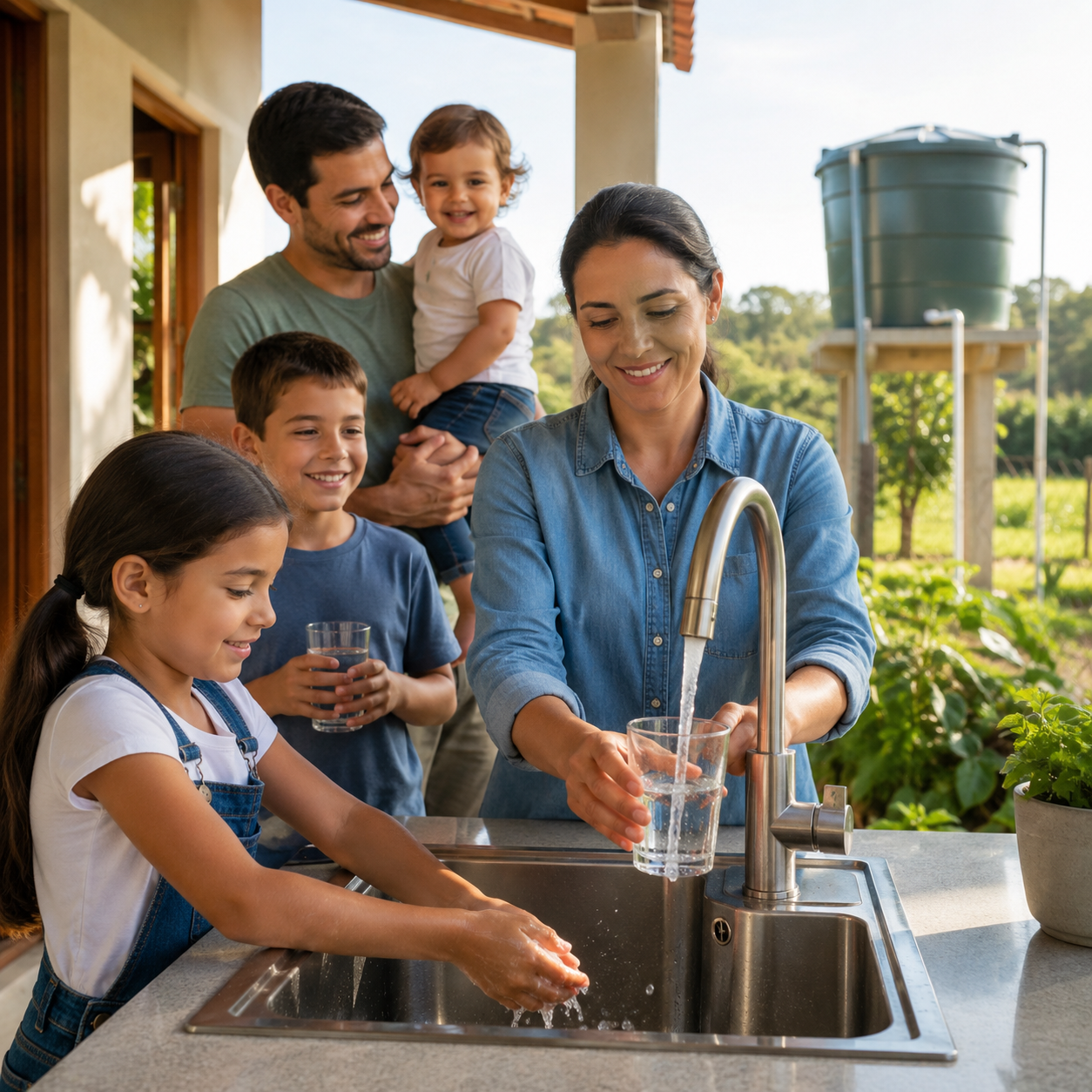
Water security:
Stable access to water fit for human consumption, with a focus on health and service continuity.

Samai Hidro combines AWG technology, renewable energy, and smart monitoring to produce drinking water for communities, institutions, and productive projects facing water-supply challenges.
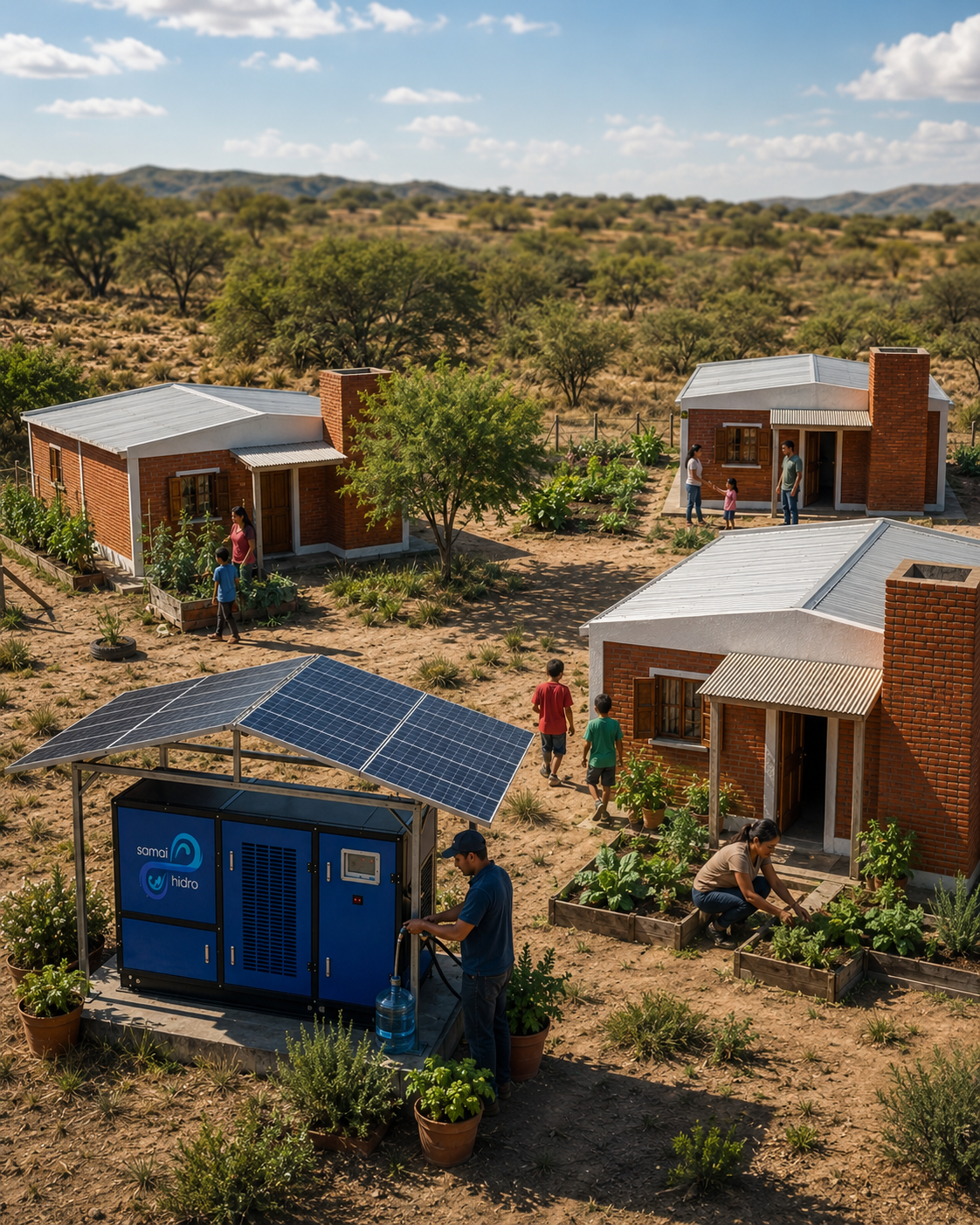
A new vision for water.
Access to water can no longer depend solely on reactive solutions or on sources exposed to salinity, arsenic, drought, or logistical constraints. Samai Hidro proposes a preventive model: producing safe water directly where it's needed.
Technology becomes a concrete tool to guarantee rights, reduce inequality, and create new opportunities for development.
The challenge.
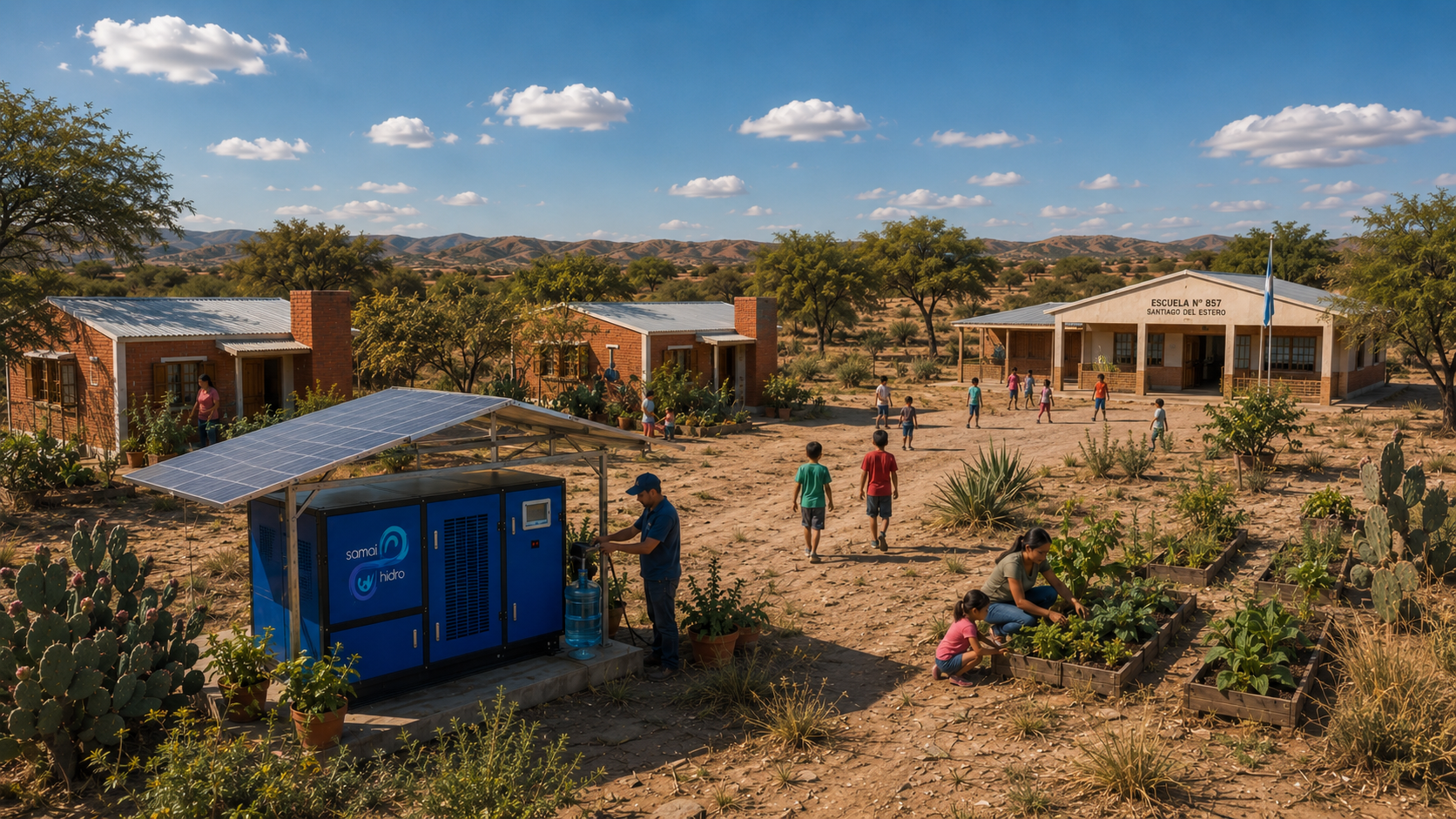
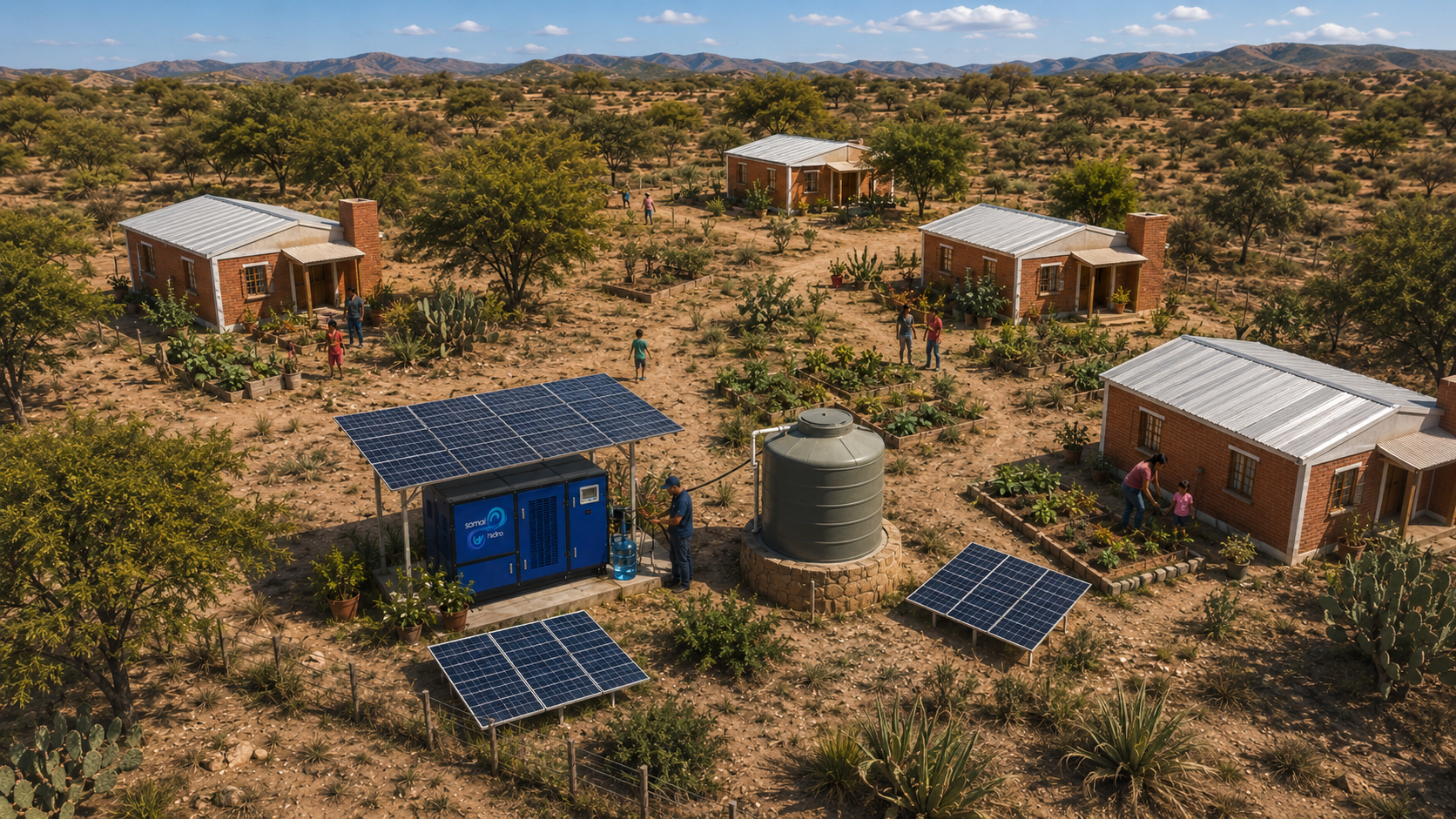
Santiago del Estero has extensive rural areas and scattered communities where access to water can be constrained by limited sources, salinity, arsenic, and extreme weather events.
Stable access to water fit for human consumption, with a focus on health and service continuity.
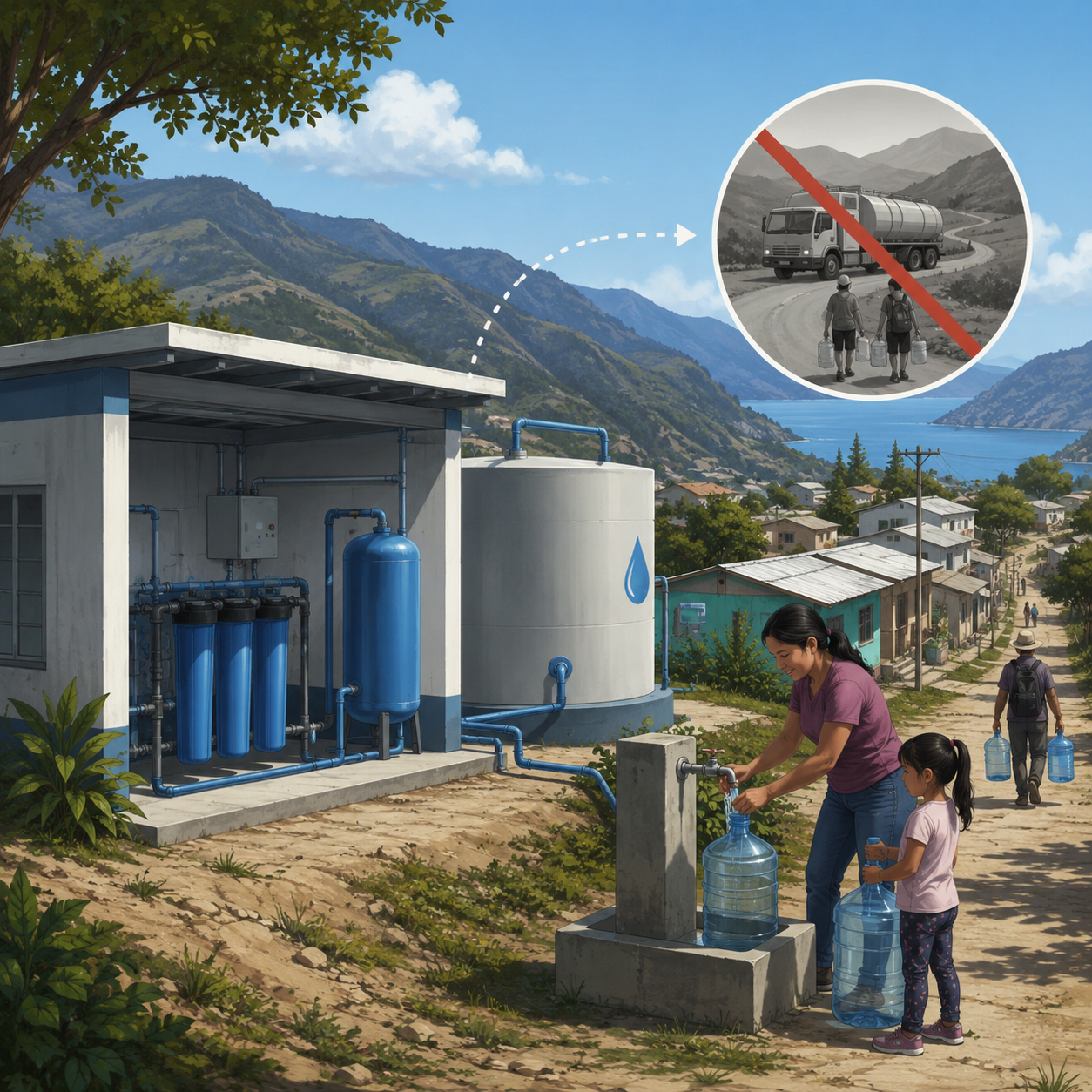
Systems that operate close to the community, reducing transport needs and logistical vulnerability.
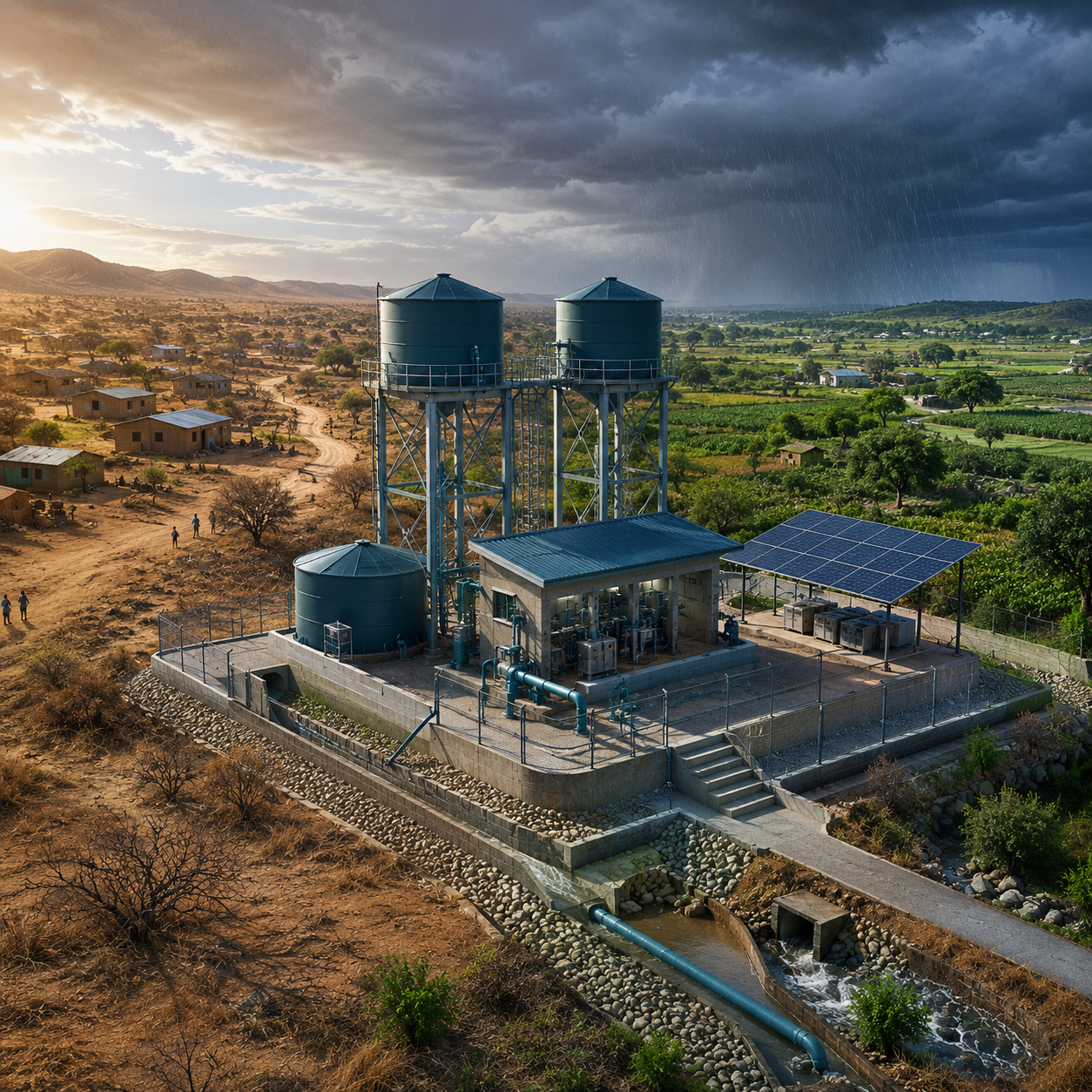
Infrastructure built for droughts, climate variability, and complex scenarios.
Proposal for the Water Transformation of Santiago del Estero: watch video
Technology.
AWG systems capture atmospheric humidity and turn it into water through a controlled, efficient, and scalable process.

The unit draws in ambient air and removes particles through initial filtration.

Humidity is converted into liquid water through cooling or absorption systems.
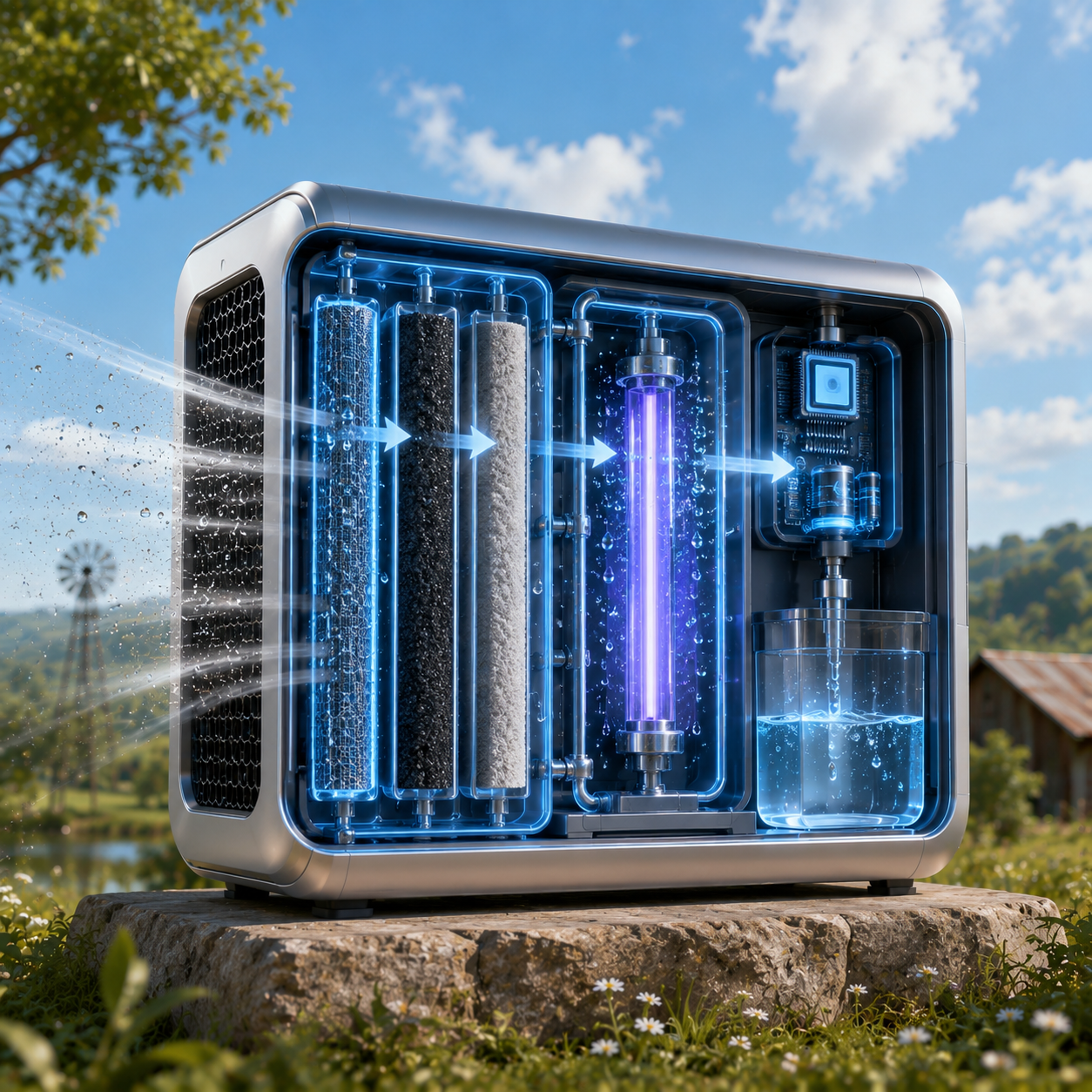
The water goes through filtering, sterilization, and quality-control stages.
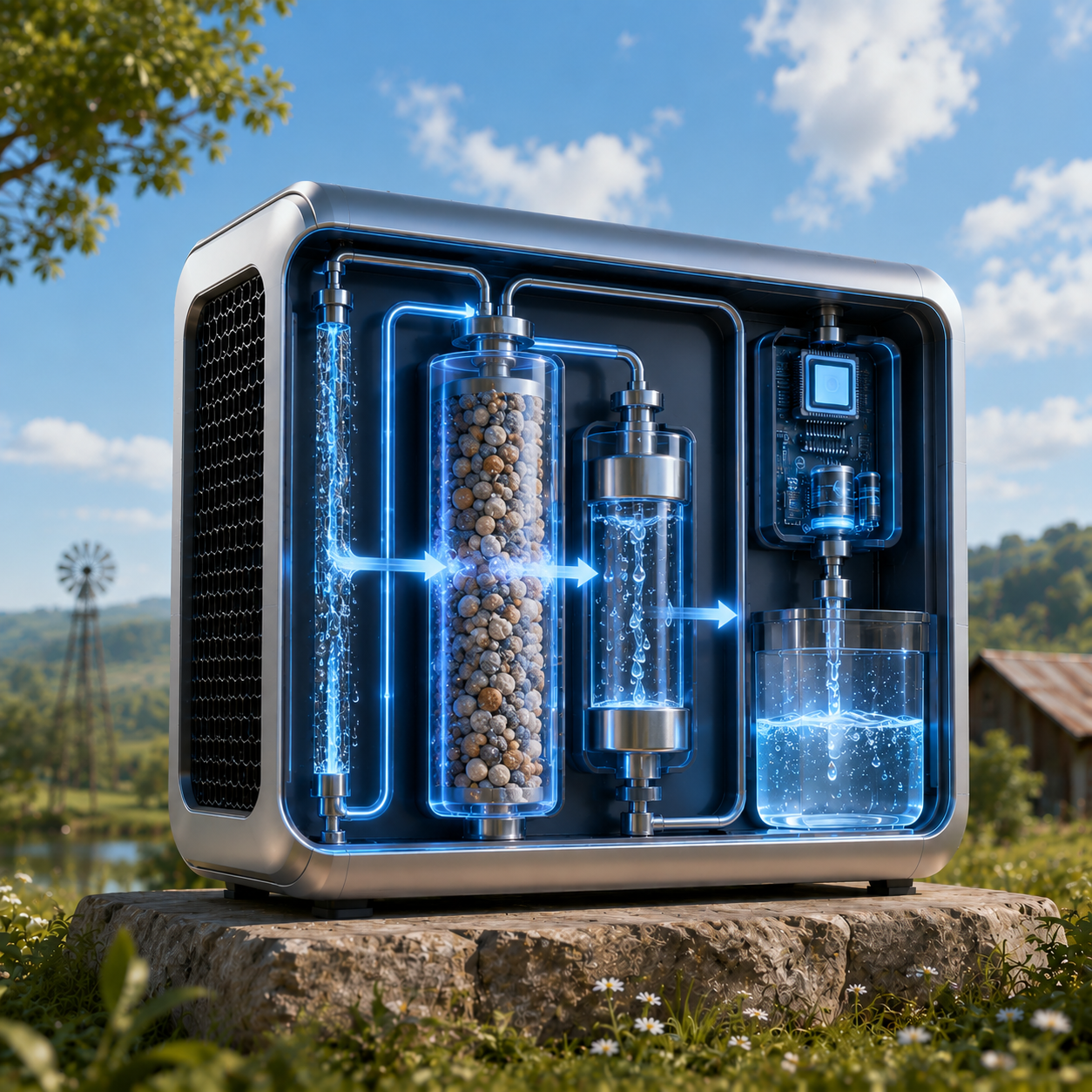
The result is conditioned to deliver safe, good-tasting water.
Physicochemical Analysis Protocol: Document I, Document II, Document III, Document IV The methodology used to perform the physicochemical analyses is detailed in the manual “Standard Methods for the Examination of Water and Wastewater, 23rd edition.” CAA: Argentine Food Code (Código Alimentario Argentino).
Clean architecture.
The design supports solar integration, decentralized operation, and indicator tracking to ensure performance, maintenance, and operational transparency.
Access the panel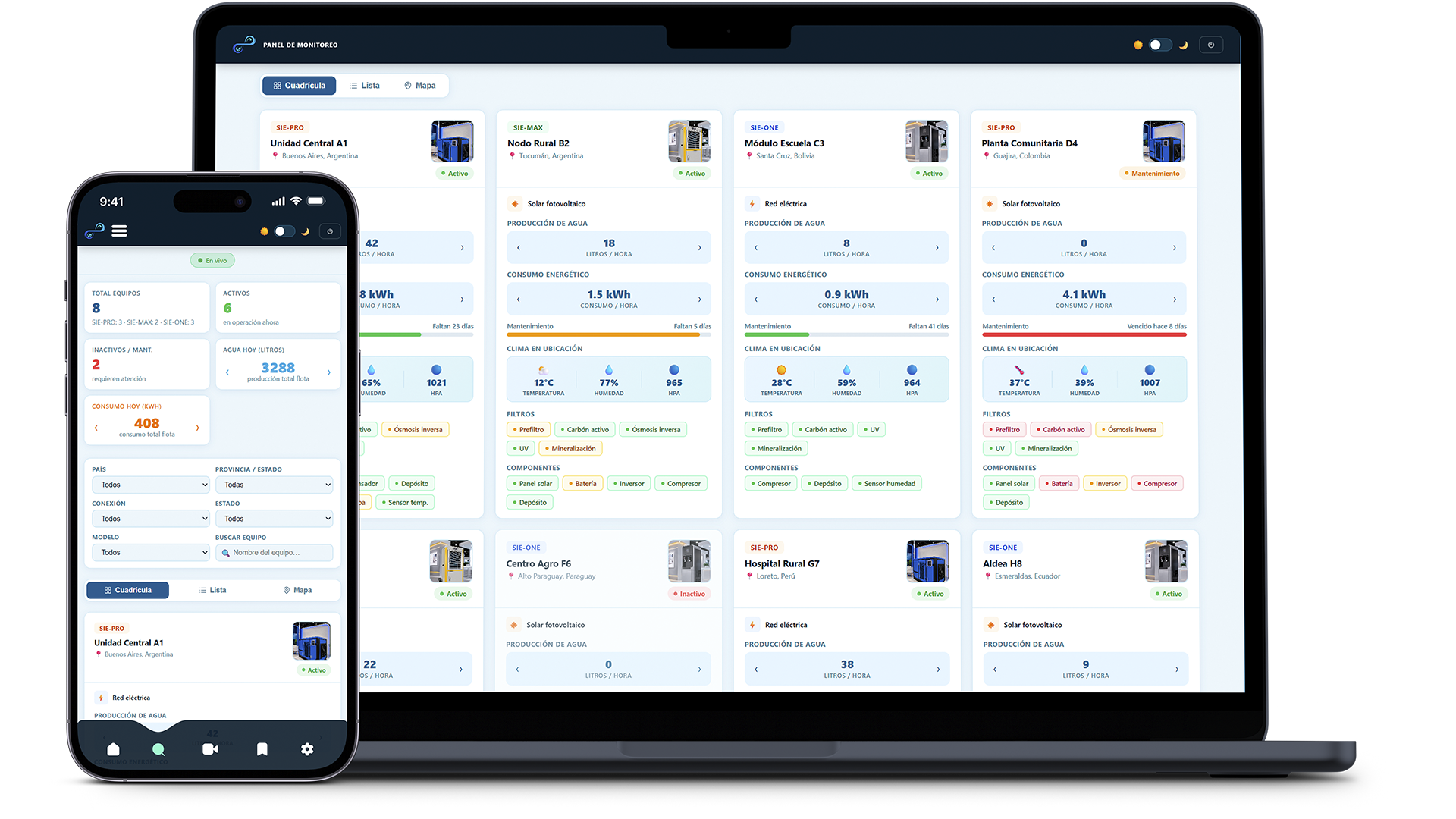
Equipment.
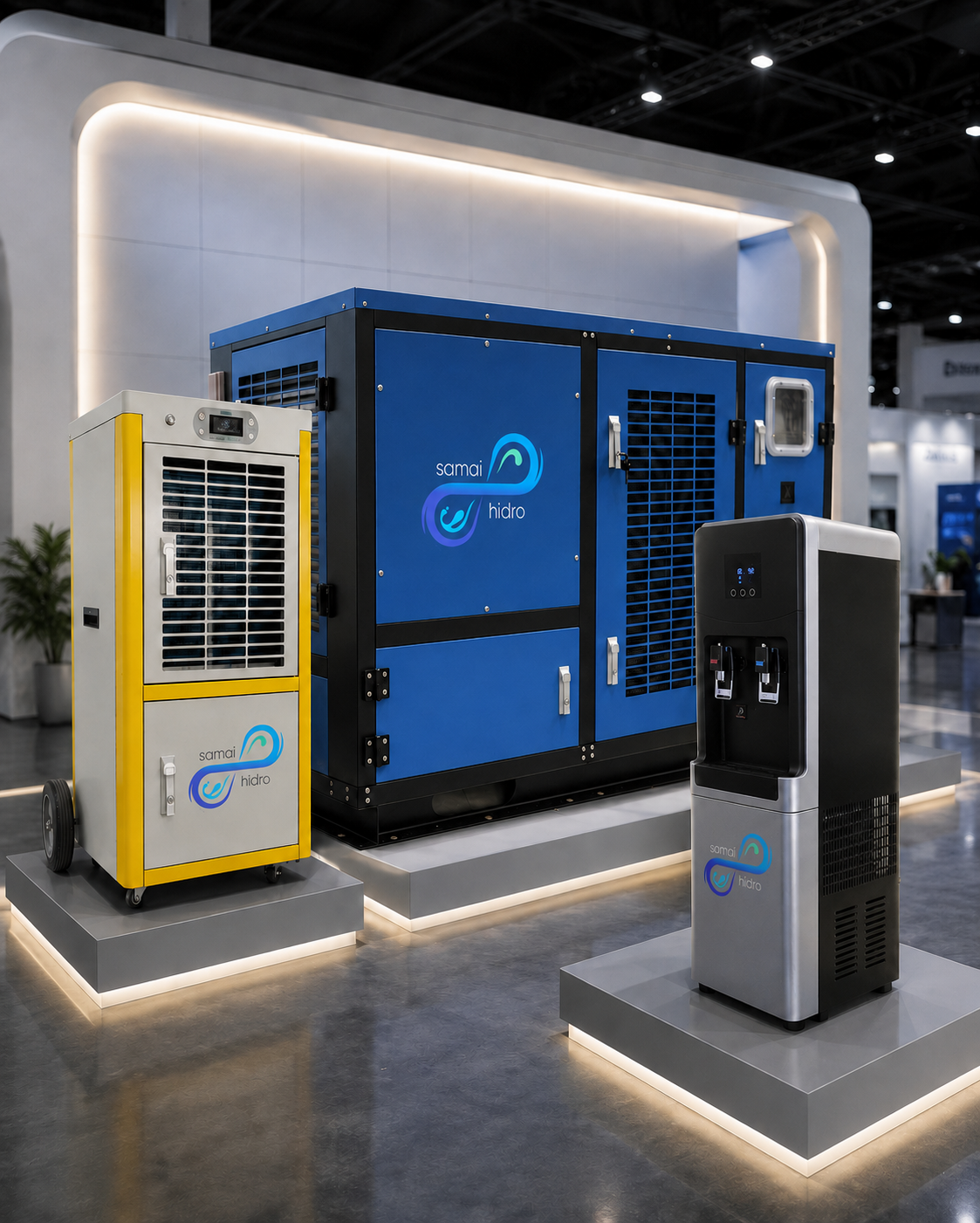
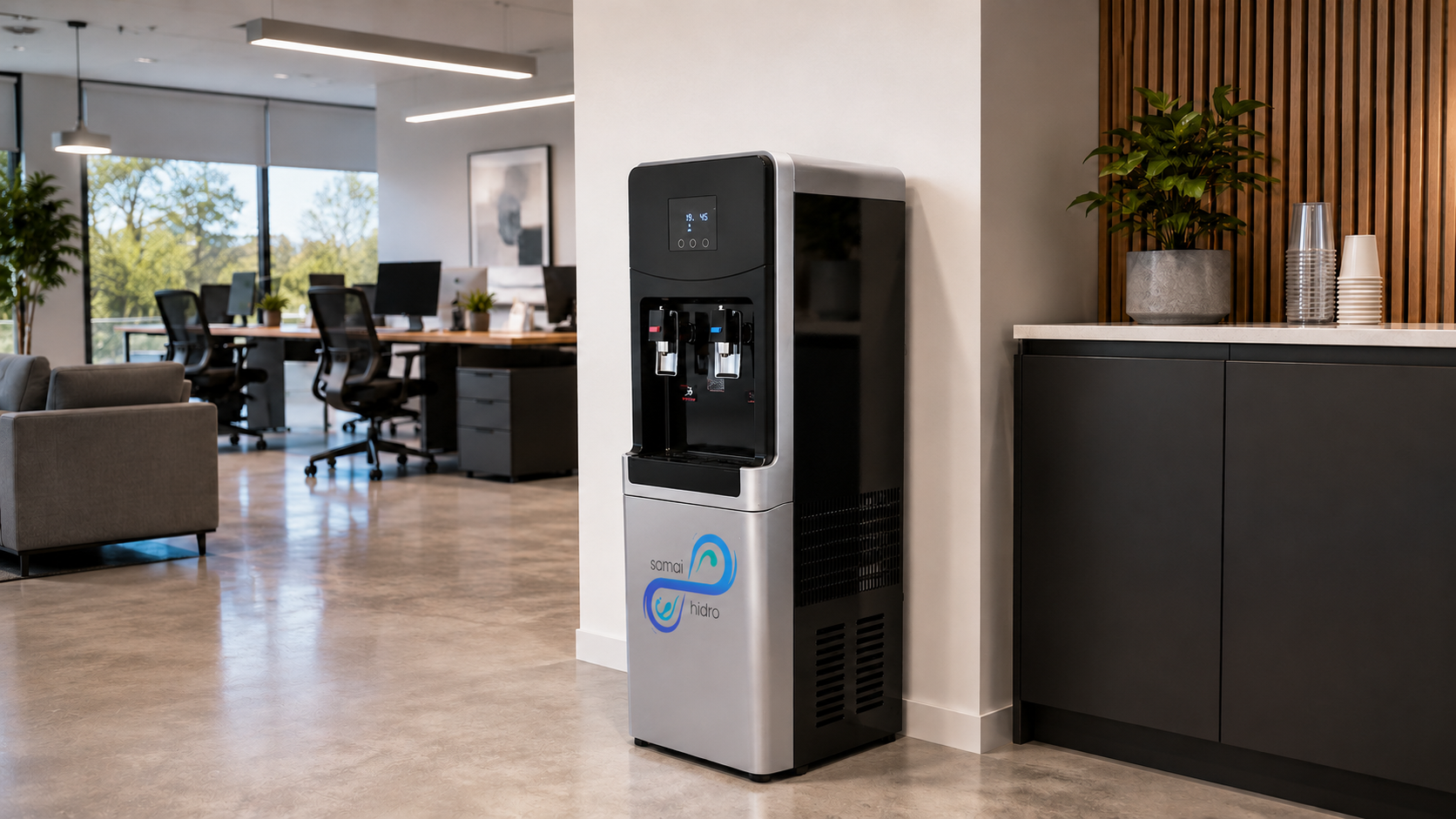
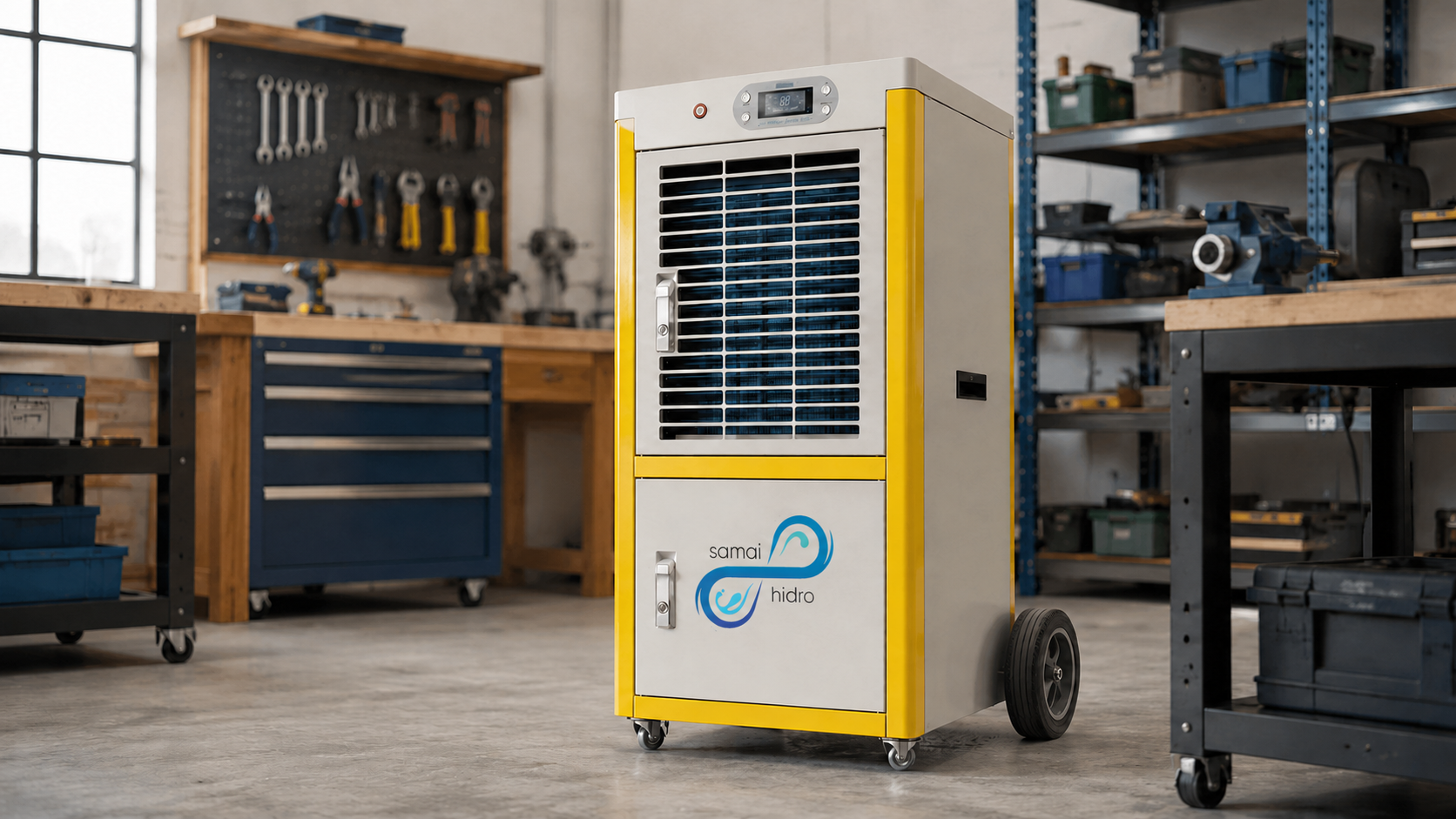
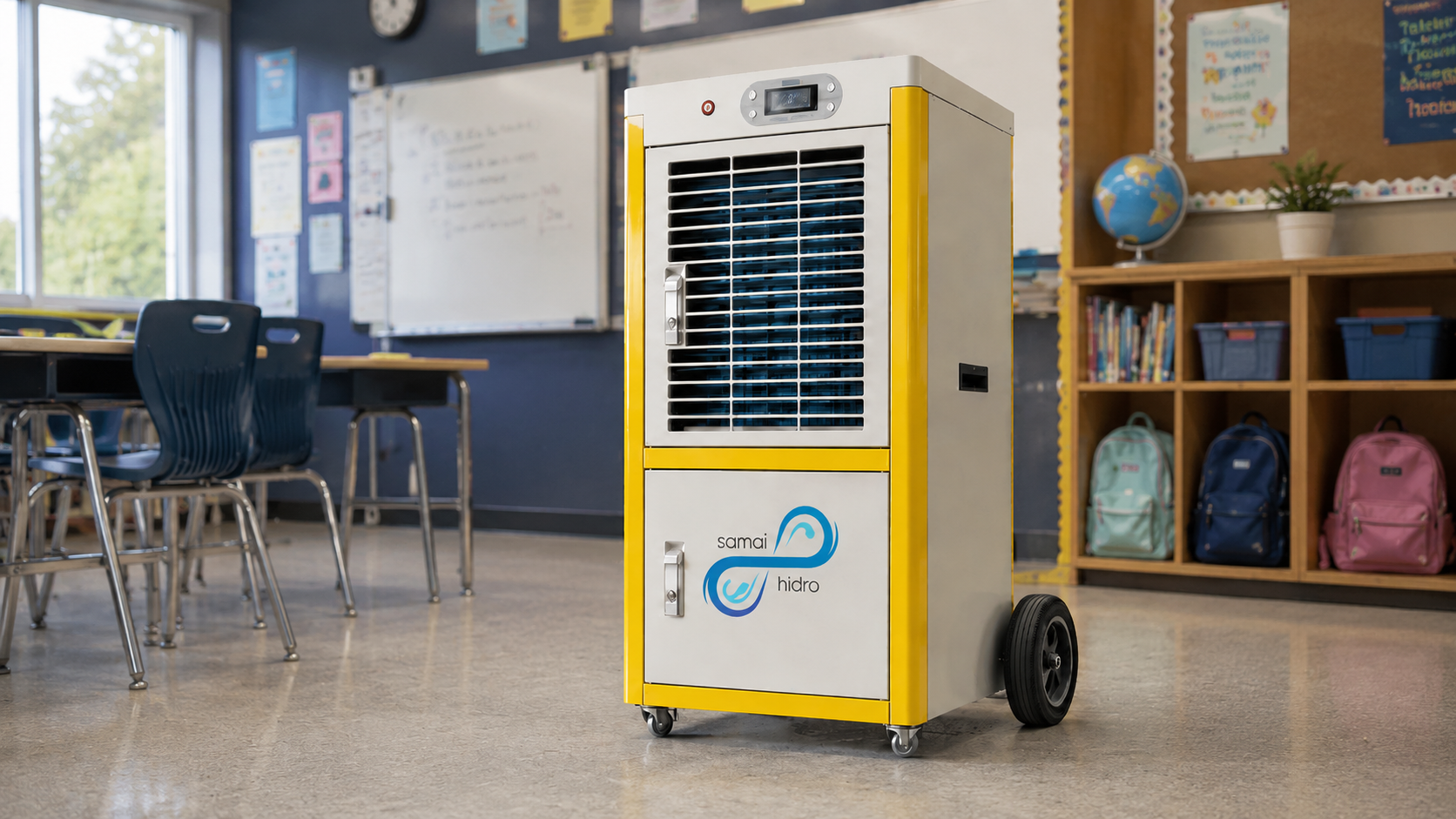
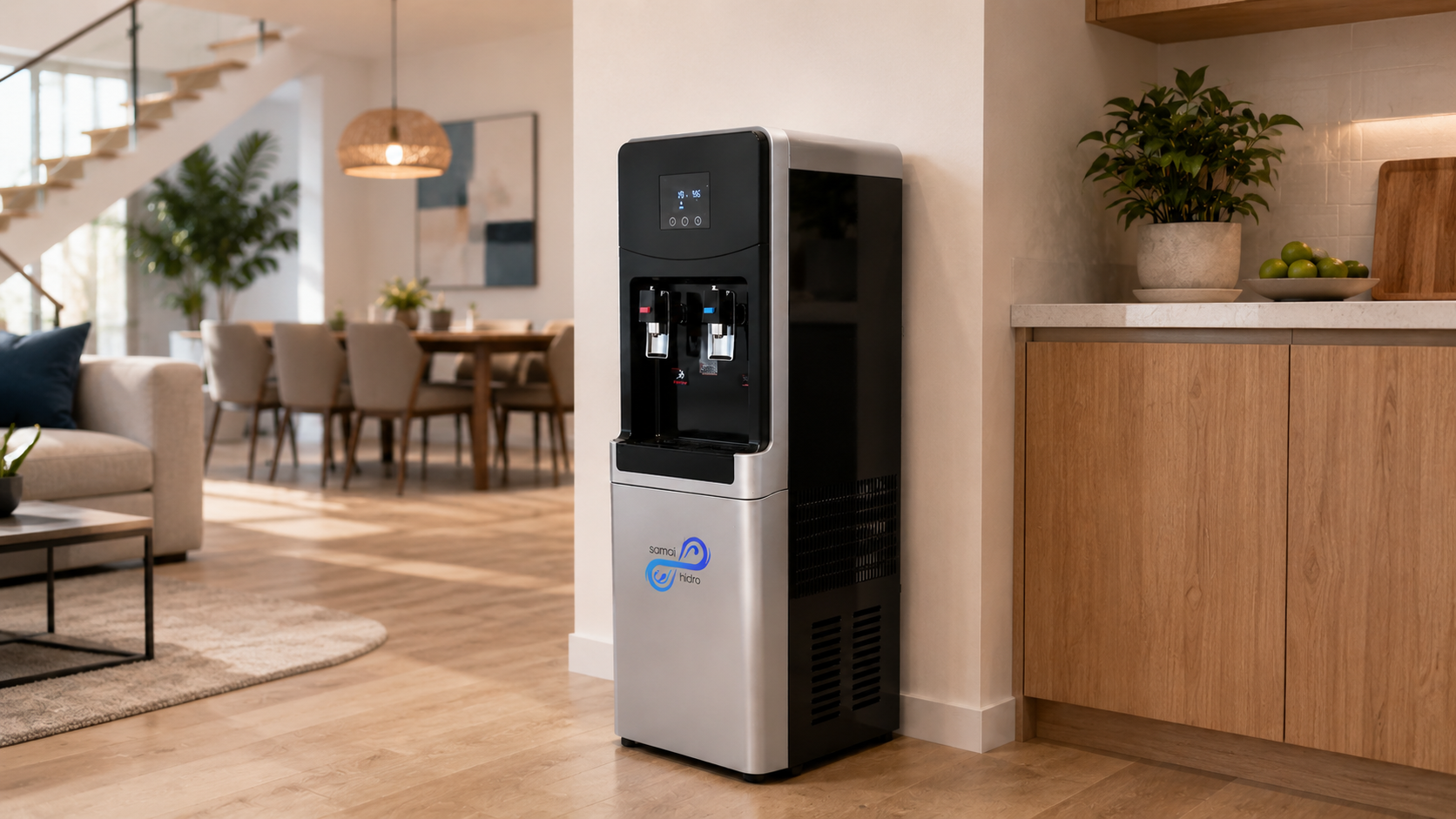
A product line designed for homes, offices, institutions, businesses, municipalities, rural communities, and sustainable projects.
Samai Hidro Network: Node-based deployment for public programs, rural areas, schools, health centers, or productive parks. On-site assessment, phased installation, and verifiable indicators.
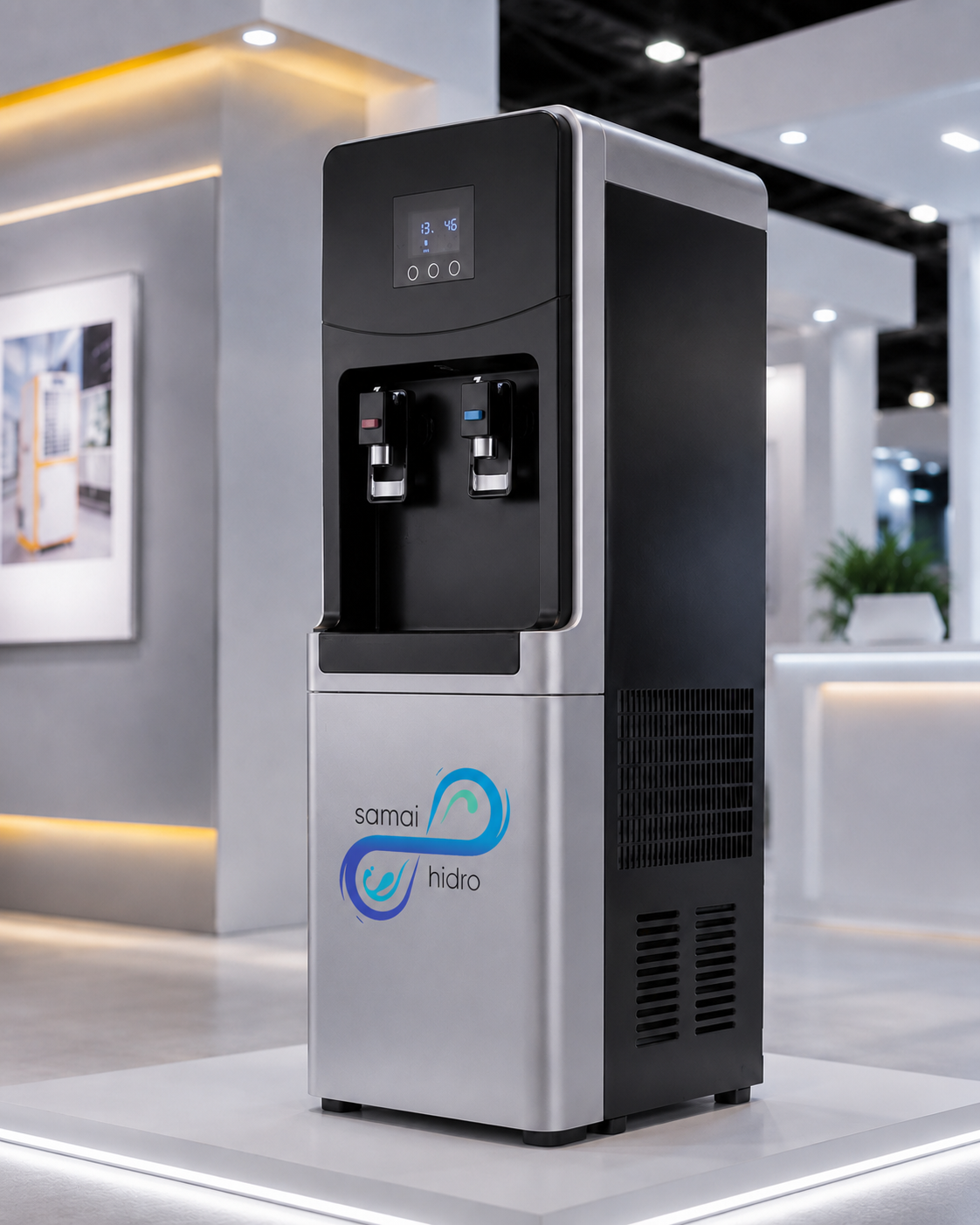
Daily-scale unit for small spaces, points of use, offices, homes, or demonstration pilots.
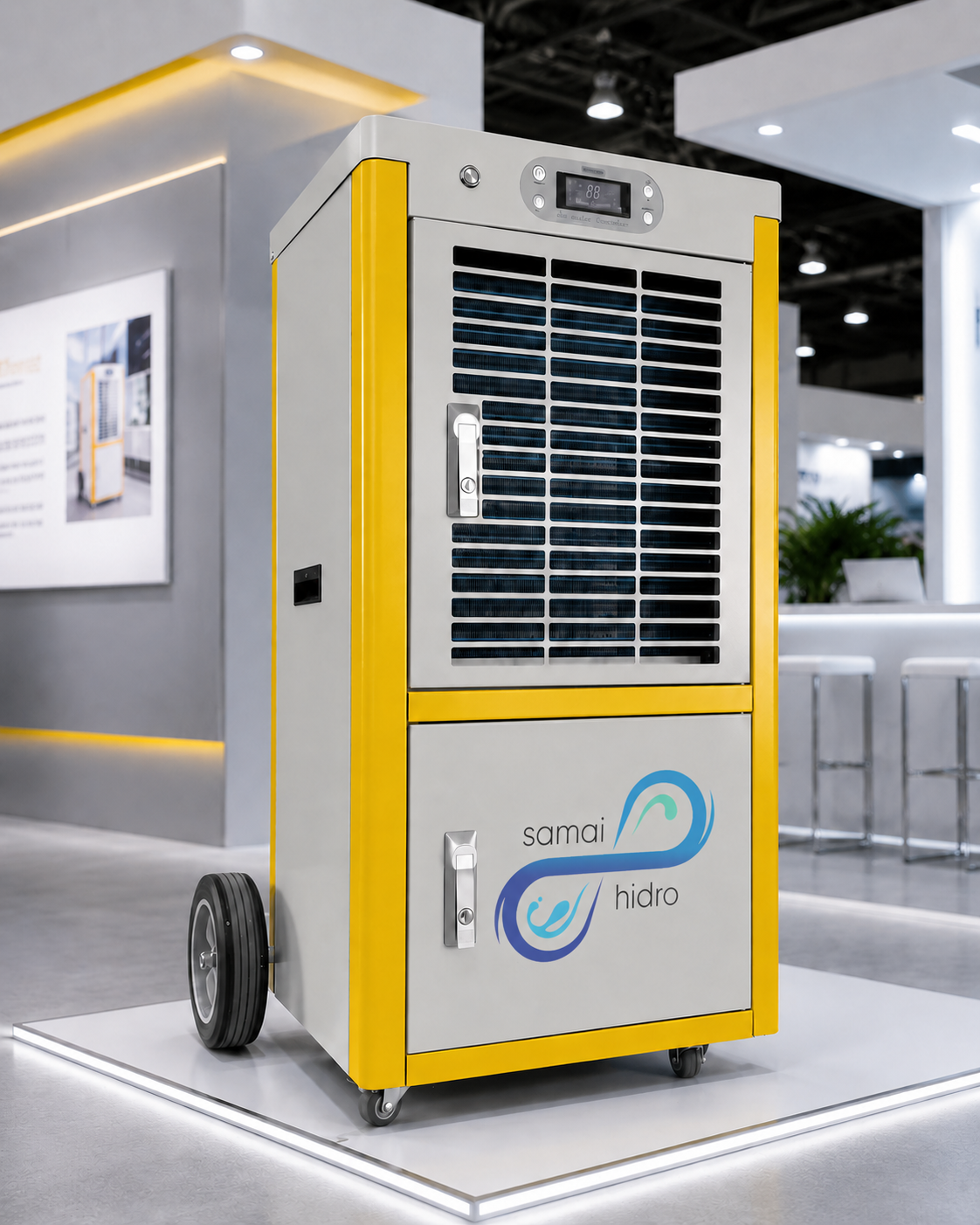
A mid-range option for organizations, work groups, or initiatives that need operational continuity without high-volume demand.
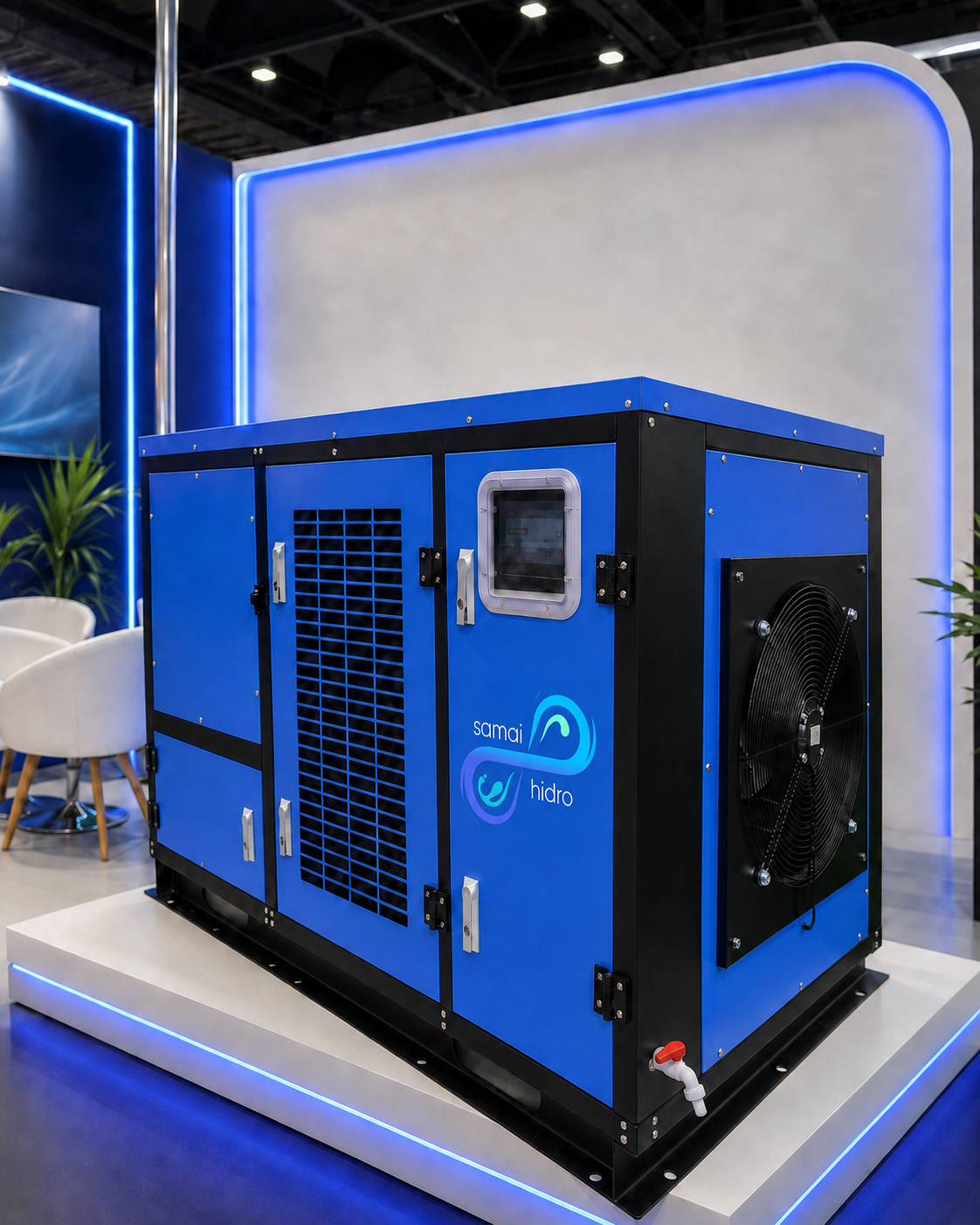
Higher-capacity solution for organizations, communities, institutions, and continuous-demand operations.
Enter your unit's parameters and get a real-time cost estimate.
Found on your electricity bill
E.g.: 110V, 220V — check the unit's nameplate
Technical manual or device nameplate
Varies with ambient temperature and humidity
Expected impact.
Samai Hidro doesn't just deliver water: it builds lasting capacity to improve quality of life, reduce health risks, protect resources, and enable new green-economy models.
Safe water, better school retention, and reduced territorial inequality.
Less exposure to contaminated water and natural contaminants such as arsenic.
Less pressure on aquifers and reduced supply logistics.
Optimized operating costs and increased sustainable investment.
Transformation plan and applications.
Immediate, permanent access to safe water to improve families' everyday lives.
A province-wide smart water infrastructure network powered by renewable energy.
Verifiable water benefits, climate financing, and sustainable expansion of the system.
Applications.
Roadmap.
Pilot program and technology validation.
Progressive territorial scale-up.
International certification of water benefits.
Consolidation of the provincial water-sovereignty model.
Frequently asked questions.
Yes, operation is straightforward. After purchase, you receive documentation and guidance materials for installation and operation. Depending on the type of deployment, the process can be supported by our technical team.
Yes. The system captures humidity from the air, filters out particles, condenses the water, and applies multi-stage purification to produce safe, clean water fit for human consumption.
It's a device that collects water molecules present in the air, condenses them into liquid form, and then applies filtering, sterilization, and conditioning treatments.
Performance depends on temperature, ambient humidity, and power consumption. Under favorable conditions, higher humidity allows for more water production at a lower operating cost.
It generates water without depending on a pre-existing water source, reduces the need for transport, avoids complex piping installations, and enables local access to safe water with smart control.
An AWG integrates air filtration, atmospheric water generation, purification, storage, sterilization, and smart control/operation systems.
It can be used in homes, offices, schools, health centers, hotels, industrial facilities, rural communities, water-scarce areas, climate emergencies, and off-grid projects.
Contact.
Fill out the form to get information, schedule a meeting, or evaluate a Samai Hidro solution for your community, institution, business, or project.
Send a message
We'll respond shortly
Have a quick question? Leave your details here and we'll get back to you. For more detail, you can go to the full form.